Showing posts with label thoughts. Show all posts

Wednesday, July 18, 2012

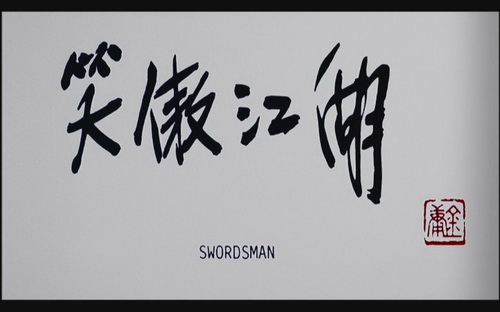
Thoughts on 笑傲江湖


While I was resting at home the past 1+ weeks, I started reading through my favorite novel 笑傲江湖 again. This must have been my 6 or 7 times reading this epic work by 金庸.

I first started falling in love with 金庸's works when I was 10 yr old. I went from perfect eyesight to 300+ degree in short-sightness in one summer holiday as I frantically read through all of his works in those 2 months. And out of his works, 笑傲江湖 always remains my favorite, mainly because of 令狐冲, whom I could greatly relate to even as a young boy.

In my younger days, I was a lot more fascinated with the various 武功 depicted in the novel. But over the years, as I re-read this classic, I began to appreciate and understand its significance as a work on various human mentalities within a political context. In fact, 金庸 makes no secret that this is precisely his goal as he wrote the novel during China's cultural revolution in the late 60s. 

After my 2 volunteer trips to Cambodia, I thought deeply about how one could contribute to the society in a more effective manner and the conclusion I came to is that one would likely have to take on the role of a policy maker and in most instances especially in developing countries, this equates to being a politician.   

But being a policy maker or politician often means making compromises on one's principles, and most certainly a surrender of one's own private life. Being able to follow Confucius' belief of "知其不可而為之" is indeed really tough. I suppose this is why I could relate to 令狐冲; his character is one of pursuit of individual freedom while never refusing to surrender one's own integrity standards. This sort of man can indeed always stand on a moral high ground, yet the complexity and the interactions of the various belief systems and power forces in a society means that such obstinate adherence to one's principles will certainly limit the actual scale or effectiveness of this person's contribution to society.

Of course, one can always aspire to become the likes of 方證大師, but the temptation for more influence and power will always be there and I'm just not entirely confident of staying clear of the hideous path of 岳不群, 左冷禪. And it's also likely a path of no return once you've adopted the role of a public figure; the tragic ending for 劉正風 and 曲洋, while fictional, is very much a reflection of real life's difficulty of leaving the political sphere.

In any case, I'm reproducing the epilogue written by 金庸 at the end of 笑傲江湖. As I grow older, these words evoked more thoughts. This really ain't a simple novel, but a well-structured depiction of various political beings. I'd certainly be re-reading this in a few years' time (if God willing) and hopefully I'd gain some new insights again. Anyways, here's the epilogue; really well-worth a read:


聰明才智之士,勇武有力之人,极大多數是積极進取的。道德標准把他們划分為兩類:努力目標是為大多數人謀福利的,是好人;只著眼于自己的權力名位、物質欲望,而損害旁人的,是坏人。好人或坏人的大小,以其嘉惠或損害的人數和程度而定。政治上大多數時期中是坏人當權,于是不斷有人想取而代之;有人想進行改革;另有一种人對改革不存希望,也不想和當權派同流合污,他們的抉擇是退出斗爭漩渦,獨善其身。所以一向有當權派、造反派、改革派,以及隱士。


中國的傳統觀念,是鼓勵人“學而优則仕”,學孔子那樣“知其不可而為之”,但對隱士也有极高的評价,認為他們清高。隱士對社會并無積极貢獻,然而他們的行為和爭權奪利之徒截然不同,提供了另一种范例。中國人在道德上對人要求很寬,只消不是損害旁人,就算是好人了。《論語》記載了許多隱者,晨門、楚狂接輿、長沮、桀溺、荷丈人、伯夷、叔齊、虞仲、夷逸、朱張、柳下惠、少連等等,孔子對他們都很尊敬,雖然,并不同意他們的作風。   


孔子對隱者分為三類:像伯夷、叔齊那樣,不放棄自己意志,不犧牲自己尊嚴 (“不降其志,不辱其身”); 像柳下惠、少連那樣,意志和尊嚴有所犧牲,但言行合情合理   (“降志辱身矣,言中倫,行中慮,其斯而已矣”); 像虞仲、夷逸那樣,則是逃世隱居,放肆直言,不做坏事,不參与政治(“隱居放言,身中清,廢中權”)。 孔子對他們評价都很好,顯然認為隱者也有積极的一面。   


參与政治活動,意志和尊嚴不得不有所舍棄,那是無可奈何的。柳下惠做法官,曾被三次罷官,人家勸他出國。柳下惠堅持正義,回答說:“直道而事人,焉往而不三黜?枉道而事人,何必去父母之邦?” (《論語》)。  關鍵是在“事人”。為了大眾利益而從政,非事人不可;堅持原則而為公眾服務,不以功名富貴為念,雖然不得不听從上級命令,但也可以說是“隱士”——至于一般意義的隱士,基本要求是求個性的解放自由而不必事人。


我寫武俠小說是想寫人性,就像大多數小說一樣。這部小說通過書中一些人物,企圖刻划中國三千多年來政治生活中的若干普遍現象。影射性的小說并無多大意義,政治情況很快就會改變,只有刻划人性,才有較長期的价值。不顧一切的奪取權力,是古今中外政治生活的基本情況,過去几千年是這樣,今后几千年恐怕仍會是這樣。任我行、東方不敗、岳不群、左冷禪這些人,在我設想時主要不是武林高手,而是政治人物。林平之、向問天、方證大師、沖慮道人、定閒師太、莫大先生、余滄海等人也是政治人物。這种形形色色的人物,每一個朝代中都有,大概在別的國家中也都有。


“千秋万載,一統江湖”的口號,在六十年代時就寫在書中了。任我行因掌握大權而腐化,那是人性的普遍現象。這些都不是書成后的增添或改作。   


《笑傲江湖》在《明報》連載之時,西貢的中文報、越文報和法文報有二十一家同時連載。南越國會中辯論之時,常有議員指責對方是“岳不群”(偽君子)或“左冷禪”(企圖建立霸權者)。 大概由于當時南越政局動蕩,一般人對政治斗爭特別感到興趣。


令狐沖是天生的“隱士”,對權力沒有興趣。盈盈也是“隱士”,她對江湖豪士有生殺大權,卻宁可在洛陽隱居陋巷,琴簫自娛。她生命中只重視個人的自由,個性的舒展。惟一重要的只是愛情。這個姑娘非常怕羞靦腆,但在愛情中,她是主動者。令狐沖當情意緊纏在岳靈珊身上之時,是不得自由的。只有到了青紗帳外的大路上,他和盈盈同處大車之中,對岳靈珊的痴情終于消失了,他才得到心靈上的解脫。本書結束時,盈盈伸手扣住令狐沖的手腕,歎道:“想不到我任盈盈竟也終身和一只大馬猴鎖在一起,再也不分開了。”盈盈的愛情得到圓滿,她是心滿意足的,令狐沖的自由卻又被鎖住了。或許,只有在儀琳的片面愛情之中,他的個性才极少受到拘束。


人生在世,充分圓滿的自由根本是不能的。解脫一切欲望而得以大徹大悟,不是常人之所能。那些熱衷于權力的人,受到心中權力欲的驅策,身不由己,去做許許多多違背自己良心的事,其實都是很可怜的。   


在中國的傳統藝術中,不論詩詞、散文、戲曲、繪畫,追求個性解放向來是最突出的主題。時代越動亂,人民生活越痛苦,這主題越是突出。


“人在江湖,身不由己”,要退隱也不是容易的事。劉正風追求藝術上的自由,重視莫逆于心的友誼,想金盆洗手;梅庄四友盼望在孤山隱姓埋名,享受琴棋書畫的樂趣;他們都無法做到,卒以身殉,因為權力斗爭不容許。對于郭靖那樣舍身赴難,知其不可而為之的大俠,在道德上當有更大的肯定。令狐沖不是大俠,是陶潛那樣追求自由和個性解放的隱士。風清揚是心灰意懶、慚愧懊喪而退隱。令狐沖卻是天生的不受羈勒。在黑木崖上,不論是楊蓮亭或任我行掌握大權,旁人隨便笑一笑都會引來殺身之禍,傲慢更加不可。“笑傲江湖”的自由自在,是令狐沖這類人物所追求的目標。


因為想寫的是一些普遍性格,是生活中的常見現象,所以本書沒有歷史背景,這表示,類似的情景可以發生在任何朝代。


Tuesday, July 10, 2012

My near-death experience

Yesterday, I almost died. I was literally a few seconds away from certain death. The fact that I'm now back in my house in Singapore and typing out this blog post with just my right hand (as my left shoulder's injured) still leaves me with this surreal sense of this thing called life. I probably should be sleeping now as I have an appointment with a specialist in the morning, but I need to get this out, while the memory's still fresh in my mind. Humans are creatures of habits and one can easily become comfortable once things start returning to the routine, which is why I need to write this now, so that this can serve as a clear reminder from myself that this miracle has happened to me; that I've been given this incredible gift of life; that I'd get to see Tammy and my family again; that I'll get to re-read 笑傲江湖 again; that I'll get to write another song; that I'll get to travel to new places with the love of my life; that I'll get to see Patrick and Nicholas again; that I'm given this second chance to "make a dent in the universe"...

It all started when we came to know of this Korean company that manufactures a fairly unique type of aircraft that supposedly utilize the principle of "wing in ground" (WIG) effect to achieve fuel efficiency by flying relatively close to the water surface. In a way, it's like a flying ship, such as the one below:


Turns out one of our sister companies was interested in this product and since we came to know the CEO of the Korean company through Robert, our Korean friend, we decided to arrange for Mr. Ahmed, the CEO of our sister company to check out the flight performance in Korea.

So yesterday, Robert, Ahmed and myself took an early domestic flight from Seoul to a small town called Sacheon which is a cluster of the aerospace industry in Korea where the Korean company's headquarters are located. When we arrived at the take-off site, the weather was perfect, there was barely any wind and the water was extremely calm. They first did the demo where they flew the plane around the bay so that we could observe the flight performance from the jetty.

Thereafter came our turn to experience how it feels as a passenger. Ahmed took the seat next to the pilot while Robert sat beside me at the back. It was a 5-seater so the cabin was relatively small. We put on our life jackets, buckled up the safety seat belt and put on some noise-canceling headphones so that we can communicate with each other during the flight. Everything went smoothly for the first 10-15 mins where we flew a good distance in both the WIG mode (around 5 meters above water surface) as well as actual flight mode where we climbed to an altitude of around 50 meters above water surface.

Towards the end, the pilot decided to give us one more demonstration of the plane's capability. I heard him mumbled something in Korean and then I heard Robert translating it, saying that the pilot wants to show us how it will feel when the plane hits the water surface while flying in WIG mode. He did it once and the plane bounced off rather violently. And then it happened.

I'm not sure if he attempted a second "touch-and-go" on the water surface or that he has lost control after the first bump. Regardless, the next thing I knew I was already drowning. It all happened so quickly, probably over a period of 10 seconds. Those 10 seconds felt like hours now that I'm reflecting on what happened.

In fact, I think it was quite likely that I was knocked out cold when the plane crashed but immediately came to as the water gushed in and I started drowning. It took me 1 or 2 seconds to realise what was happening. The first thought that came to my mind was that the plane was sinking into the ocean. I struggled to gasp for air for another 1 or 2 seconds and that was when it hit me: I was about to die. I thought about Tammy and realised I probably only had a few more seconds to do what I had to do in order to have any chance of survival.

As I calmed myself down, I realised that while the safety belt has prevented me from any major injuries, it was now dragging me in the water while my life jacket was pulling me up in the opposite direction. I reached for the release buckle of the safety belt and only managed to release it on my third attempt.

I still wasn't sure if I was going to live because I knew I was still stuck in the cabin and if the water had filled up the entire cabin, I'd still die from drowning in this enclosed space of water. And then the miracle happened! Turns out there was about 15-20 cm of air space trapped towards the roof of the cabin. As I took in my first breath of air, I told myself that I must live to see another day.

At that point, I still thought that the plane was sinking as it was almost pitch dark. It didn't help that I lost my glasses and everything was blurry. I started shouting for Robert as he was sitting right next to me before the crash. After a few seconds, Ahmed surfaced to the same trapped air that I was breathing in. I felt incredibly glad that someone else aside from me was alive. I started asking Ahmed if he was ok but before I could finish my question, he had disappeared into the water again and did not come back up. Then it dawned on me that he must have found an exit out of the aircraft and that the plane was not sinking but instead was probably still floating on the water surface. I made my way to where Ahmed had disappeared to and felt my way around using my hands. It was then I realised there was a big hole in the cabin wall, which I later found out was the entrance door that had come off during the collision. I used my hands to reach across the hole to feel what was on the other side and I felt air! We were indeed still on the sea surface!

I was still wearing my life jacket at this point and I remembered watching some Discovery channel program of how dangerous it is to be wearing a life jacket in a capsized ship. So I took it off, took a deep breath in and swam through the hole. When I came out from the other side, I saw, to my greatest relief, sunlight beaming against the body of the plane that was now capsized and I thought to myself, "Yes, I'm going to live! Yes, I'm going to live!"

After I caught my breath, I noticed that Ahmed had managed to climb up onto the aircraft body. I tried pulling myself up as well, which was when I realised I had badly injured my left shoulder. I was so focused on staying alive that I only realised my injury then. Fortunately, Ahmed was already on the plane and he helped to pull me up. We were both badly shaken and I saw that Ahmed's face was full of blood. I took a closer look at Ahmed's face and told him that he had cuts around his eyes and they were blood-red. I asked him to close either eye to make sure he could still see clearly from both eyes; thank God his eyesight was still intact.

Now that I was on top of the aircraft, I finally took stock of the scale of the damage. (Update: Below is a link to a news report that a korean friend forwarded to me a fews after:


The left wing had completely detached from the main frame while pieces of debris from various parts of the plane were floating around us. Then I noticed a body floating about 5 meters away from us. I couldn't make out who he was as I was without my glasses so I shouted across "Robert, is that you?" Then I heard him crying for help; "Help me Help me". It was Robert. I was so glad to know that he is still alive!

Both Ahmed and I thought he still had his life jacket on and that he would eventually swim back towards the aircraft. However, after about half a minute, Robert still kept crying for help; he was still not out of the woods yet. I really really wanted to jump in and pull him towards us but given that my left arm was useless now and without my life jacket, I just wasn't confident of doing that.

And then Ahmed did a very brave thing; he jumped back into the water, swam towards Robert and pulled him towards the aircraft. Fortunately, Ahmed still had his life jacket and the sea was extremely calm. Thinking back now, I think it would have been extremely difficult for us to save Robert if the sea was just a fair bit rougher and Ahmed also took off his life jacket like I did.

Robert was finally pulled to the edge of the aircraft and I held on to his arm while he tried to stay afloat holding on to the aircraft. He mumbled to me a few times "What happened? What happened?" but I was more concerned about whether he had sustained any major injuries. I asked him if he felt pain anywhere but he wasn't answering me. I saw some blood flowing from the back of his head and I knew he was still disoriented about what had just happened.

Ahmed managed to get himself up on the aircraft again while I tried to also pull Robert up. After a few tries, it was clear that I wasn't able to do it especially with my invalid left arm. For the next few minutes, I kept talking to Robert, telling him that he is going to live, that we will get through this together. I was very afraid that he might lose his consciousness and any fighting spirit left in him. After Ahmed regained his strength, he pulled Robert to the side of the aircraft where the entrance door was and asked Robert to step on the edge of the hole to push himself up to the aircraft while I crawled towards the other end of the remaining right wing so that we can maintain balance instead of all 3 of us crowding on one side of the aircraft.

After much effort, Ahmed finally managed to pull Robert up. While I told myself that the three of us will get to live, I couldn't find any sight of the pilot. I remember speaking with Ahmed about the pilot but we both knew that given our current physical state, we just didnt have the capacity to go back into the cabin to look for the pilot. So we sat there and waited. For the next 15 minutes, I tried to recollect myself and tried to make sense of what happened. I started praying, thanking God for giving me this precious second chance to live. This is the first time I've prayed in a long time. Frankly I was hoping for some religious enlightening moment but somehow I was too shaken to feel His presence.

I then started thinking about how I've always told myself that I need to be prepared about dying young, that I need to live my life to the fullest so that I'll have no regrets when the moment comes. But at this point when I had come so close to death, I realised I'd still be full of regrets if I were to leave this world. I asked myself if I could have been a better husband, a better son, a better brother, a better person who can contribute something really meaningful to this world.

As I was cuddling my left arm to ease the pain on my shoulder, I saw the 'Stay Hungry, Stay Foolish' tattoo on my left arm, I thought Yes, I might have this tatt on my arm and I always tell my friends about this inspirational speech by Steve Jobs, I even signed off my emails with this motto of mine to keep reminding myself, but it now dawned on me that despite all these superficial displays, I still wasn't following the true sense of the phrase. I then made a promise to myself that from this moment on, I really need to live my life to the fullest. Suddenly, I felt this strong determination to become better in everything that I do. I felt this strong desire to do the very best in my job as an investment manager, as a husband to Tammy, as a filial son to my parents and in laws and as a role model to my brothers and brother-in-laws....

In the midst of waiting, I kept talking to Robert to make sure that he stays conscious. Finally, after around 20 mins, the rescue boat from the Korean company finally found us. As they approached us, they saw only the three of us and two of the employees immediately jumped into the water to search for the pilot in the cabin. After a few minutes, they finally managed to pull his body out from the cabin and onto the rescue boat.

The boat was rather small and they lay the pilot body right in front of me as they tried frantically to resuscitate him. I really couldn't bear to look at him but when I took a glance, I noticed that his face had turned purple but he did not seem to be bleeding anywhere. I immediately thought that the person lying there now really could have been me as he probably died from drowning rather than from any injuries sustained from the crash. Suddenly this image of me lying in a coffin while Tammy cries over my dead body hurts me so much. While I was feeling much guilt that I couldn't save the pilot, I thank God again that Tammy didn't have to go through this trauma.

What happened in the next 12 hours or so went by in a blur. We were first brought to a small medical centre and later to a bigger hospital in Jinju. Upon arriving at the medical centre, I asked for a phone so that I could call Tammy. I was so glad to hear her sweet voice. I briefly explained what had happened but I assured her that I was okay and that I'll see her soon. Meanwhile, the doctors tried their best to revive the pilot but it was hopeless.

I had the least injuries out of the 3 survivors and was in a relatively clear state of mind. While Ahmed did not sustain any major injuries, Robert's case was a lot more serious as we found out later that he had fractured 4 ribs and his right shoulder was completely fractured. I spent the next few hours at the hospital in Jinju circling between the 2 beds where Ahmed and Robert were resting, reassuring them that they'd be alright. I was especially worried about Robert because of his transplanted kidney a few years back. Knowing that he requires daily medicine to sustain himself, I was worried about further complications that may jeopardize his condition. I started making calls to my colleagues in Abu Dhabi as well as seeking help from our good friends at SNUH. Eventually we managed to arrange for our transfer back to Seoul (after much delay though as we had to wait for the local police to take our statements) where I knew we would receive the best treatment from the medical team in SNUH.

As I sit here now, in the comfort of my home and in the company of my loves ones, I still found it hard to come to terms of what had happened. I think that now, I can finally understand how some people had described in novels/movies as seeing their whole life flashing by in front of them at the moment of their deaths. I suppose drowning, as opposed to say a fatal car accident, gave me more than the immediate instant to come to a conscious awareness that I was going to face death. 10 seconds, while trivial in normality, was an eternity for me when I was fighting between the fine line dividing life and death. I am very sure if I had not managed to release my safety buckle on my third attempt, I would not be writing this now.

In a way, this accident, while tragic given the pilot's death, is truly a God-blessed gift to me. Not only had I managed to escape the plane crash with relatively minor injuries, I had now experienced first-hand what it's like to really face certain death. I've always held to the belief that one should be prepared to die young and hence, all this talk about planning for the long term, "you-have-to-be-pateint-son-cos-you-are-still-too-young-and not-ready" are largely make-belief that gives one the illusion and a false sense of longevity. A long life expectancy of a particular country, say 80 years-old, doesn't actually mean you are likely to live past 80, it merely means, as stoic as any other statistical measures, that 50% of the population would be dead before they reach 80. Singapore's life expectancy at birth is 81, and I was close to dying at 32.

If your perspective of your own time horizon is just months, instead of decades, then you'd quickly realize what really needs to be done, and what are that meaningless stuff that you felt compelled to do, be it because of societal pressures or personal deception of who one really is.   

Again, I find much inspiration from this extract from Steve Jobs' speech at Stanford: 

"Remembering that I'll be dead soon is the most important tool I've ever encountered to help me make the big choices in life. Because almost everything — all external expectations, all pride, all fear of embarrassment or failure - these things just fall away in the face of death, leaving only what is truly important. Remembering that you are going to die is the best way I know to avoid the trap of thinking you have something to lose. You are already naked. There is no reason not to follow your heart."

Now that I've gone through this near-death experience, I can now say with a lot more certainty that indeed death is the most useful instrument to remind one of what is really important. Every breath I'm taking now is a precious gift, and I fully intend to make the most out of this second chance at life!

Before I end, I'd like to express my sincere gratitude to a few people who really helped me a great deal over the last 2 days; to KK and Jeehyae and my other colleagues back in Abu Dhabi, as well as the good people from the UAE Embassy, who assisted greatly with the various logistic arrangement; to Mr Moon, Grace and the team from SNUH who went to great lengths to ensure we were well taken care of and for accompanying me until 4am to complete my own treatment/diagnosis; to Chris from the Korean company for assisting with all the translation and coordinating with the various parties who constantly dialed in to receive updates on us; to Kenneth who waited until the wee hours to make sure I arrived to SNUH safely and accompanied me to the airport (it was great to finally see a close friend after the incident); to Sally who took us to Gleneagles and provided much comic to cheer the day; to Tammy's biaojie who got me an appointment with a great orthopaedic surgeon so quickly; to all my relatives from all over the world and the friends who have expressed their concern; I'd also like to thank Ahmed and Robert; seeing both of them alive had given me great strengths and hope to carry on despite our tragic circumstances. I certainly look forward to catching up with both of you after 3 of us have fully recovered from our injuries.

Finally, I need to thank my family, especially my dear wife, Tammy. It was because of them that gave me the fighting spirit to stay alive. And to God, as I know my survival is truly a miracle. He must have decided that I still have some use in life and gave me this second chance. I intend not to waste it again.


Thursday, November 17, 2011

New Life!

As my new life begins, i also have some new resolutions:

1. Listen/watch 3 1-hr iTunes U episodes per week (be it EconTalk, history/psychology/computer science/Law lectures from Harvard/Stanford/Yale etc)

2. 3 gym visits per week

3. 1 soccer session per week

4. 1 new book per month (6 fictions & 6 non-fictions for next 12 months)

More to come...

Friday, April 22, 2011

Recent reads...

1. Red Capitalism
2. Lords of Finance

And now moving on to some 金庸 classic... 神雕侠侣...楊過 totally kick ass man!

Blogging again?

Alright, I know I've been talking about this for ages, and truth is I'm not sure if I can keep this up but it's worth a shot. Blogging here I come again!!

Tuesday, December 08, 2009

A good deed

So after a few months of absence from the busking scene, I decided last Friday that it's time again to pick up my guitar and hit the streets! My original plan was to head to the bridge at Clarke Quay, where I had some fun playing there a couple of times previously, and I thought it was one of the best street-singing spots in Singapore. Unfortunately, the weather didn't look too forgiving and I decided to try my luck at another spot in Orchard where I played once or twice before...which is when I bumped into this dude here:


He just started busking at that spot and that means I'd have to look around for alternatives. I decided to hang around for a bit and listened to his songs, but after a few minutes, this security guard from Wheelock came and asked him to leave. I was quite surprised since this spot has been quite a popular place for buskers for years and I've never heard of complaints from the mall management. So I decided to speak with the supervisor to find out why the sudden change in their "tolerant" policy.

When i reached his office, he seemed like he was expecting someone like me to come down to his office to question him on this issue, and he duly showed me a news article (laminated no less!) that described how the busking areas in Orchard has been defined more specifically now. He told me if we wanted to sing there we'd have to contact LTA. I wanted to tell him that the tunnel is not a private property of the mall and the way I see it, we're hardly driving away any crowds from their establishment...then again he didn't look like he was in the mood to negotiate so I figured it'd be easier to just find another spot. I think one of these days I should really pen a proper proposal letter to SMRT and LTA to propose more busking spots (much like how the Tube in London had all these designated spots for busking).

Obviously, the busker was disappointed when i came back to the tunnel to break the news to him. Actually at that point I thought that will really be the end of my busking night since I can't really think of a spot in Orchard that is actually good for my type of busking (besides the wheelock tunnel). Fortunately the busker brought me to this other spot adjacent to Shaw. That spot is quite noisy because of the human traffic so I never gave it much thought; but the busker advised that with my amp i might be able to pull it off...so i thought i might as well give it a go since I've got all my "barang barang" with me. And I'm glad I did. It's not the best place to busk, but the place is enclosed such that the echo actually sounded quite good :)


So i set up my gears and played for more than 2 hours. Tammy came to give her support (yay!) and helped me took some photo with the iPhone.


Half-way through my busking I noticed an old lady setting up some "street store" around 20m away from where I was. I know I've talked about how I want my busking to be a financially self-sustainable activity in the past, but I've always tried to make it a point that I'm not busking in an adjacent location to a more "needy" busker/street-vendor (yes i do think of busking as somewhat akin to the real estate business). I took a look at the money in my box (i'm guessing ~$70 worth?) and took another look at her...I guess I'd just have to be not so "investment-driven" for once and passed her my income...


Well, she was very pleased when I passed her the $$, and she told me this will cover her rent...when i heard that i thought how terrible it'd be if I had made a decision to do otherwise...anyways, she insisted of "selling" me one of those items she had laid out on her mat...and there're plenty, ranging from instant noodle packs to t-shirt to canned food...


So i took home the only thing that i could think of being useful to me...a really dated guidebook for A level economics....that is the last thing i expected to find from her "collection"...well, i took it, for ~$70...this is one of those few times in life where i actually feel good overpaying for something..hee :)

Tuesday, September 15, 2009

Missing blogging...

Thing is, I've been reading (blogs, books) and singing so much these days I never quite took the time to actually sit down, calm myself, reflect and blog about the things/ideas that have been occupying my mind. I've kept up with the habit of jotting down ideas and now I've got ton of emails lying somewhere in my inbox that I wrote to myself every time I came across a particular thought or idea. Well, doing that "recording" is well and good, but actually developing these ideas in a more cogent fashion in blog post is what I miss doing. Blogging a sincere post often turns out to be a lengthy and sometime exhausting event for me; not that I care much about the grammer - it's the thought process where I must force myself to organize all these various ideas into a single post that really helps me internalize and think through the themes spinning around my brain. Yes, I do miss blogging...I hope I'd have the discipline to keep up with the posts now that I've decided to start writing again...we'd see how this goes from here~

Thursday, May 28, 2009

I shall blog again!

thought to self: when I'm done with my CFA BS...i intend to blog much more regularly! i really sld...

Friday, April 10, 2009

Thoughts on rights issue

I actually wrote this almost 2 months ago. While I've circulated to some close friends to bounce off some ideas, I decided that I should only post this after the successful completion of my employer's rights issue. Realistically, the material below is not specific to any particular rights issue (though I did refer to examples of specific ones to make my point), rather it's a collection of some thoughts on how a shareholder should interpret/evaluate a rights issue, and it is my contention that the media at large has done the public a big disservice by possibly presenting a wrong framework to look at the whole issue. Having said that, I must confess that I'm really no expert and it's totally possible that my points here below are not relevant or worse, wrong in its conclusions. Indeed i'd be more than happy to hear your views on how I might have misinterpreted the mechanism or screwed up the analysis.

Finally, I've posted 2 models on google spreadsheet, one done by me, and a follow-up done by my friend Eli. If you're the number-crunching kind, I suggest you dive straight to them. The models are fairly straight forward.

So, here goes, a long post on the topic of Rights Issue:

When is discount a discount?

Let's start with something fairly recent. CapitaLand announced a 1-for-2 renounceable rights offer for an equity raising of ~S$1.84b, at S$1.30 per new share or 45% discount to the trading price prior to announcement (S$2.36). My first impression upon learning the news was that the offer price was at a steep discount, and as an existing shareholder, I thought that it's a bargain that I shouldn't miss. Perhaps I could "average down" my per share cost? How about any dilution effect? Are we transferring wealth from existing shareholders who're not participating in this equity raise to those new shareholders who's getting the shares at a discount?

I was not alone in this line of thinking. The next day, BT runs an article on the rights offer with the following line: "...another element that caught most analysts by surprise was the steep discounts at which the rights issues are being done..." while quoting another analyst saying that "CapitaLand and CMT could be pricing the rights issues lower to entice their shareholders to take up their allotments in the current weak market."

Then the following day, BT runs another article, making a similar point, "...This has led some to suggest that such hefty discounts - disbursed by two of Singapore's biggest companies, no less - may become the benchmark for subsequent issues. If DBS and CapitaLand are pricing at 45% discount, can much smaller companies ask for anything higher? While there are many factors influencing pricing, such as the number of rights shares against the number of existing shares held and size of rights issue, the market is bracing itself for more deeply discounted deals to follow. This will be bad news for weaker firms that are trying to raise cash from shareholders, now that the banks have turned their backs on lending. Without deep discounts, rights issues may fail if shareholders shun them..."

However, on second thoughts, this "discount" somehow doesn't feel right. Firstly, share price is a function of the shares outstanding, but the number of shares outstanding can be entirely arbitrary. The only figure with "real" economic meaning is the market cap (although strictly speaking, even the market cap is just a stretch of imagination of what very few people, at a particular point in time, think the common equity portion is worth and we just extrapolate that as what all the other non-participating must also think; certainly an intellectually convenient shortcut to quantify worth, but for our purpose can be said to be more "real" than share price or shares outstanding). Indeed, comparing Berkshire's A share price (~US$90,000) and Microsoft share price (~US$19) has no meaning while comparing their mkt caps (US$140b vs US$170b) gives real insight.

In other words, the rights issue ratio, with which the ending outstanding shares are calculated, can be adjusted to achieve different "discount" offer price, while ensuring that the amount of new equity raised is the same. If so, isn't this "discount" an illusion? In fact, could the issue ratio be adjusted to produce a "premium" offer price instead of a “discount” price? Will my ending economic interest as a shareholder be enhanced or eroded due to such an offer? I figured it'd be easier to just do a quick model to find out.

The analysis

Assume a hypothetical company with 36 shares outstanding originally (see below). The current traded price is $2.00, giving a mkt cap of $72.00. Also assume that there’re 3 existing shareholders, each holding 12 shares or one-third of the equity (although they each have a separate average cost of investment, with investor A buying in at the highest at $5, and investor C buying at $2, the current price). Note that I’ve also computed the cost of stock for each investor per 100 parts of the stock (eg. Investor A: $60/33%/10 = $1.80). I’d explain the significance of this additional measure later.


Now suppose the company announce a 1-for-2 rights offer (similar to CL’s arrangement; see case 1 below) at an offer price of $1.00 per new shares, or 50% below the last traded price of $2.00. Assuming full take-up, the company will be able to raise a total of $18 with a Theoretical Ex-Trading Price (TETP) of $1.67 and pushing the mkt cap from $72 to $90. Here, we show that both investor A & B fully take up their respective rights, hence maintaining their proportional share of the stock (at 33%). Doing so will naturally lower their cost of investment on a per share basis (investor A from $5.00 to $3.67 & investor B from $2.00 to $1.67). However, such comparison is nonsensical as the very yardstick used in this measurement (ie. number of shares outstanding) is different before and after the equity raising. This is like measuring a shoe lace with a ruler based on centimeters standards and measuring a slightly longer shoe lace with another ruler based on inches and then concluding the shorter shoe lace is actually longer because of the nominal value in cm.

Instead, the more consistent way to calculate the cost of investment in a stock is to use a fixed base, in this case I’ve chosen to split up the stock into 100 parts. As such, we can see below that the cost of stock for Investor A has increased from $1.80 to $1.98 and for Investor B $0.72 to $0.90 after the rights offer. This makes sense because while both investors A & B maintain the same proportion of the stock (both 33%), the pie (or worth of the company) has become larger so naturally the cost of investment on a per 100 part basis would have increased.
Now what if an existing shareholder declines to participate with this equity raising? How would his economic worth change after such an exercise? If we only think about the value of the stock, it would seem that his economic interest would have been diluted. However, the shareholder has a second recourse, which lies in the value of the rights he’s been conferred.

Here, we show that investor C does not participate in the equity raising, so he’d have maintained his original number of shares (12 shares). What should he do with his 6 “rights” then? These “rights” are essentially call options, and call options have 2 sources of value, its intrinsic value if it’s in-the-money and its time value (for the potential of being more in-the-money before maturity). We can think of the offer price of $1.00 as the strike price of the option, and if we assume for the moment that the TETP of $1.67 will indeed be the ex-trading price, then this “right” will have an intrinsic value of $0.67 (we’d ignore the time value for now; in any case, it’d be a very small value due to the typical short trading window associated with rights). Then, investor D, someone who has not prior shareholding in the company, comes along and if he also agrees that the ex-trading price will be $1.67, he’d be willing to purchase these rights at $0.67 apiece from investor C. The end result is that investor C’s stake in the company would have been diluted from 33% to 22%, but he’d have realized a cash gain from the proceeds of the rights sale, with the net effect that his economic worth would have maintained the same at $24 although they’re now being represented in different assets. Previous, he had 12 shares at $2.00 (giving $24), now he has 12 shares at $1.67 and cash of $4.00 (also giving $24). One interesting outcome is that his ending cost of stock (net of cash proceeds from rights sales) on a per 100 parts basis would have remained at $0.36 (ie. (12 x $1 - $4)/22%/100=$0.36 ). Why is this the case?


Assume then instead of a 1-for-2 rights offer, the company announces a 1-for-1 offer. In order to raise the same amount of equity ($18), the offer price for such shares would be $0.50 (instead of $1.00 previously). The ending mkt cap will be the same, at $90. Looking at both investor A & B (who both participate fully in offer and hence maintaining 33% stake each), their per share cost of investment would appear to have reduced (eg. Investor A from $5.00 to $2.75) but on a per 100 parts basis, its ending cost would be $1.98, the same as it were under a 1-for-2 offer. In other words, the existing shareholders who take part fully in such issue should have been indifferent between different “discount” in offer price or rights issue ratio.

How about investor C, the shareholder opting to sell his rights? He would have received $9 in this case if he gives up all his “rights to pay up” and his stake would have been reduced from 33% to 17% correspondingly while maintaining his original economic worth of $24. On the other hand, his cost of stock on a per 100 parts basis would have been $0.18 (ie. (12 x $1 -$9)/17%/100 = $0.18) versus the original $0.36. This is true “averaging down” of cost since this is based on a fixed scale (ie. 100 parts) instead of the usual averaging down when most think in terms of cost per share.


Let’s take a closer look to see how this reduction in cost of stock (per 100 parts) is achieved. Table 4 shows Investor C’s possible profile under both 1-for-2 (blue) and 1-for-1 (red) offer scenarios as he adjusts his ending stake in the company. He can vary his stake by opting to participate partially in the rights offer (selling some rights while exercising the rest himself). We can see here that the 1-for-2 scheme only allows Investor C to “sell down” his stake to ~22%, while 1-for-1 scheme allows him to go down to ~17%. Hence, a 1-for-1 issue actually allows greater scope for true “averaging down” (in per 100 parts basis) given the nominal discount in offer price is less than that of the 1-for-2 issue. Naturally, if investor C chooses to fully take up the rights issue, his “net worth” (accounting for the stock value and cash value) would have increased to $30 like investor A & B, but if he’s willing to exchange his asset mix from one form (in this company’s stock) to another (cash proceeds from rights sales), he might be able to do some true “averaging down”. However, I have to caution that such “averaging down” only works for the investor whose original cost of investment (on a per share basis) is higher than the offer price.

As a final note on the “discount” price, I’d like to add that in fact there should be no realistic way for the right issue to be priced at a “premium” and hence it follows that all rights issue would have to be offered at discount. One way to think of it is that if it’s priced at a “premium” to current trading price, the rights (or essentially options) will basically have a negative intrinsic value! Unless there’s legitimate reason to believe the trading price will shoot up after the announcement of the rights issue, the negative intrinsic value basically means that the shareholder will be handed a liability instead of an asset if given such rights.

Some other considerations

There’re a few more important aspects surrounding a right issue that I’d like to point out briefly (yes, this post is getting too long). First is the treatment of odd lots. This arises when the issue ratio is in some “funny” ratio whereby it’d be rather rare for the existing shareholders (especially retail investors) to convert his shares nicely into whole-number lots. I’m not sure if there’s any convention in dealing with this “odd lots” trading issue. Quite likely, there’d be a limited trading period for such lots in the market so that the lots can be made “whole” as much as possible through market transactions. I haven’t thought too deeply into this yet but I suppose the value of such “odd lots” would be slightly depressed compared to full lots simply because we have a case of motivated sellers. Just think of whether you would prefer a one-dollar coin versus 100 one-cent coins that come with expiry date!

Secondly, what if the rights issue is underwritten by 3rd parties? Essentially, the underwriters will guarantee to take up the issue if the rights are not fully taken up. But there’s a catch, these 3rd parties will pay for the issues at the discounted price, without needing to pay for the rights to acquire the new shares, because the rights have expired! This gives rise to an interesting dilemma. Basically, existing shareholders are offered the rights to buy up new shares. Now these rights have intrinsic values but they are offered to existing shareholders for free simply due to their position as co-owner of the business. Question is, why should there be an expiry date to these options and if there must be one, how long should the option tenure be in order to be considered fair? Obviously, the management calls for rights issue because it needs/wants capital injection, and presumably they want it sooner rather than later. The process admittedly shouldn’t be delayed unnecessarily but is a fair option tenure a week? A month? This is open to debate.

Final thoughts

At the end of the day, the crucial question a shareholder should ask before committing to rights issue is to decide if the company can use this new funding to produce ROIC sufficiently higher than the firm’s new WACC. If this new funding is meant for new growth opportunity, then possibly a rights issue makes sense. But if the new funding is meant to effect permanent change to the firm’s capital structure (eg. gearing), then the shareholder needs to decide whether he’d be happy if the lower return is sufficiently higher than the lower cost of capital. What certainly shouldn’t be the shareholders’ consideration (if my analysis above is correct, which I confess I’m not 100% certain) is that he shouldn’t miss out a good chance to buy shares at “discount” to cost “average down”.

Which is why I get frustrated to read things like this in the press: “Funds will sell ahead of rights issue because the rights are at a discount and cheaper than the mother share”, said Peter Ng, CEO of boutique fund on CMT rights issue….Issuing new shares at steep discount to market price is seen as one way to make these cash calls more palatable to shareholders.” – The Edge 16 Feb 2009 issue.

Indeed, I’ve always had a big problem with such misplaced trust in seemingly knowledgeable source. Journalists, economists, even doctors (just google “iatrogenics”) are all common culprits. I shudder at the thought of the many disastrous decisions made based on such over-simplification and reliance on the “obvious” reasoning. I maybe too disparaging to conventional “wisdom” (and I know I can get on people’s nerves because I’m always so skeptical), but I guess I just hate “bull shit”, especially when the fellow don’t even realize it and brand it as “advice” instead.

I got my iPhone (finally)!!!

And i absolutely adore it!!! I'm using it to read all my google reader feeds, check on bloomberg/NYT, reading Wiki articles and listening to all the great podcast from various great professors (mainly from academic earth and econ talk)...it's true that I've been eyeing iPhone since the news of its development first leaked out...but being the very frugal (= cheap) person I am, i've managed to hold off the temptation until my old phone (sony ericsson) finally dies on me...so thanks to Tammy (who paid for it), i'm now loving every single minute with it!!! the only thing i'd complain is that not every app (eg. google mobile) is available to singapore users...not too sure if the bottleneck occurs at the SingTel or the developer part...looks like the mobile space is still not fully open up like the web yet...but with all the app stores popping up for the various brands...i have high hopes that we'd see more openness and transparency in the mobile development scene...meanwhile i'd need to get back to reading my feeds...on my iPhone of course :)

Wednesday, March 11, 2009

iJounalist episode on busking

This is the TV program I appeared on a few weeks ago. I must say it feels weird watching and listening to myself on TV...anyway, you can find my reflections on the shoot in this previous post.


Saturday, February 21, 2009

Why do I street-sing? Reflections from CNA show

Well, it's a topic that I've written several times before (see here, here, here, here, and for a comic version, see here). Few weeks back, I got an email from the producers of the Channel News Asia program "iJournalist" (btw, the series is actually produced by student interns working in CNA, which I think is a cool arrangement). Apparently, they've selected to do an episode on "busking vs begging" and came across this blog. I'm glad to participate as I see it as another channel to spread my message/hope, which is that more folks like me who enjoy music or other crafts like magic or juggling etc, will use the streets as a platform to showcase and share their crafts. Of course, journalists being what they are or what they have to be (ie. to deliver a few key points in easy-to-relate punchlines and in the process over-simplify or worse, imply the most explanable but ultimately wrong diagnosis of the issue; on this I agree whole-heartedly with Nassim Taleb) and also of the fact that I don't think I made my points clearly during the interview (especially under the pressure of the camera), I feel compelled to reiterate some of my point of view on the subject of busking, especially when the episode tried to link "busking" and "begging" together (Don't get me wrong, the producers, interviewer and the TV crew were really nice folks and I had a great time hanging out with them, but the problem with journalism I describe above is a systemic issue that I suppose "comes with the job").

First of all, I never thought of busking as begging. In fact, this concept would have seemed rather absurd if you were to ask someone from US, Europe, Australia etc if busking is a form of begging. Then again, I don't think anyone can fault some Singaporeans for making the generalized observation that a substantial proportion of the buskers here are handicapped or disadvantaged in some ways. For these buskers, what they do on the streets is probably their primary means of earning an income, and for that I have the utmost respect for them. Essentially, they're offering a service of sort, and payment is completely voluntary. Sometimes, when there is money transactions involved, the immediate instinct for most people is to assume the conditions surrounding a typical market economy. But in fact, what is truly going on here is a gift economy. I highly doubt that anyone actually has a fixed budget each week under the item "expenses for the entertainment service provided by buskers". In fact, the exchange is much more spontaneous than that.

Which is why I disagree with my mom's contention that I'm taking away "business" from those who really needs it (presumably the disadvantaged ones). Most people would start out with the assumption that the "market size" of the busking "industry" (or you can think of the total earnings by every buskers) is a constant. So my busking "revenue" would have been some other buskers' "revenue". I think of it quite differently. Firstly, I don't think of the entire busking community as functioning as a single market providing the same commodity. On the contrary, each of us operate in separate markets that have minimal correlation with the each other. Being someone working in real estate, I tend to think in terms of space. As a matter of fact, busking is a lot like real estate. Depending on the kind of craft you're doing (be it music, magic, juggling etc), your addressable "market" is really just about 20-30m radius from where you are (ie. location matters). In other words, if you were to busk some 100 m away from another busker, arguably it can be said that you're competing in a different market. Of course, each of these micro-markets are still dependent in each other in some ways. After all, if a passer-by give his $$ to a busker and then 100 m down the road he comes across another busker, his willingness to give this other busker $$ could be contingent on whether he gave or how much he gave the previous buskers (ie. his "busking expense" is path-dependent). But I do see where my mom is coming from, so I always made it a point to busk at a location that's not anywhere near another busker (really, out of basic courtesy that's the only way to do it regardless of whether the "competing" buskers are handicapped or not) and given that this is a gift economy (to the extent that no one has a fixed "busking expense" budget), I believe doing so would not deprive another busker of his/her fair share of space/attention/"revenue" in a significant way.

Ok, so what if you're not "robbing" some other needy buskers of potential "revenue"; why do you even bother taking $$ if truly you're doing this purely out of your passion for music? This is, to me, a much tougher question to answer. When I first started out, I actually did not put any money box in front of me, and yet some passers-by were still giving me $$. As I was doing in the States, where the potential moral dilemma of taking "business" away from some other needy buskers didi not really exist, I thought why not, since every busker in the Bay Area were taking doing the same, and I'm sure many of them weren't doing it purely for the $$ either.

Sometime after, I came across an interview with Li ka-shing, the Hong Kong tycoon. He was describing an anecdote when he accidentally dropped a coin underneath his car. He took some effort to bend down and search for his missing coin. So why would someone whose net worth counts by the billions care about a missing coin? His response: "If I were to just ignore that coin, 50 cents may disappear from the earth forever. It may never be used. But if I get back that coin, I can invest it, donate to someone else or at least make some good use of it." That made a deep impression on me. I've come to the conclusion (for now) that I should attempt to be financially responsible in all my actions. Busking is no exception. There's real costs involved; two-way taxi rides, beverages I consume during the session and the sunk cost of my equipments. If there's a chance for me to recover some of these costs, I thought I should not deny myself that opportunity, regardless of how wealthy or poor I am. Earning $$ and how to use that $$ (either spending it for myself, my family or donate to others) can rightfully be separated into 2 distinct decision-making processes.

Then again, all the talk and focus above on $$ really misses the point. I actually hate addressing busking in such an economic way, though I admit this is one of the ways one can look at it. Indeed I still had my reservation about the approach of the iJournalist program, in their attempt to link busking and begging together. I'm not sure if it's right framework to approach busking, though I concur perhaps some Singaporeans (including my mom) view busking this way and it certainly makes for a more sensational headline. The producers actually asked me to do an experiment whereby I'd busk as per normal and then pretend to be a blind busker, and to see if my "revenue" differs under the two scenarios. On first thought it sounds like an interesting experiment but after some consideration, I declined. Besides not being comfortable with pretending to be someone I'm not, I'm also uncertain if any constructive conclusion can be arrived from such an experiment.

At the end of the day, my wish is to convince more aspiring artists to go on the streets and share their crafts. Below is a picture which Tammy took when I was street-singing in Berkeley. I was singing "over the rainbow" when this couple started dancing along the music. I mean, how can you even put a dollar sign to a moment like this? I think this picture says it all, why I do what I do.

Friday, December 26, 2008

Words of "wisdom"!?!

overheard today...

"My allegiance is with those who pay me a higher salary..."

Monday, December 01, 2008

Evolved virtual creatures~

By sheer chance i came across this book "Origin of Wealth" in the library and decided to give it a try...what a great find! I won't spoil it for the potential readers...but think economics+evolution+complex systems...came across some really cool research...check out the following:

"Sugerscape" - an 'artificially intelligent agent-based social simulation'.

And this video from Karl Sim's research on evolved virtual creatures...

Sunday, November 23, 2008

Radio: Giant pool of money

From Chicago Public Radio ...a gd piece on mortgage-securitization

30km bike ride

A 30km bike ride...ouch! my ass is hurting now...

Wednesday, October 22, 2008

Racism at Sarah Palin Rally


It saddens me to see that part of America is still like this...

Sunday, October 19, 2008

Days of Glory - Indigènes

It's been a while since I last saw a movie that really move me...Indigènes is such a movie...there is so much injustice!!! understand that the French government has resumed paying colonial pension payments again after more than 40 yrs...albeit without back payment...40 yrs!!!sigh...

Friday, October 17, 2008

Recent thoughts on crisis

"If you jump off the top of an 80-story building, for 79 stories you can actually think you're flying. It's the sudden stop at the end that always gets you." - Thomas Friedman on the financial crisis, 15 Oct 2008

On explaining the credit crisis:


It feels surreal to watch as events unfold in the financial world over the past year. In a way, I feel fortunate to be back from studies just in time to start work during arguably the best year (thus far) for the company before experiencing what is now deemed as the worst financial crisis since the Great Depression. The contrast makes the experience all the more startling. I remember taking this US economic history class in college and feeling quite detached from the course material which was describing a world based on gold standard and a worsening depression due to the monetary expansion in the earlier years in 1920's and subsequent inaction of the central bank. I find it hard to comprehend without a reference or anchor to a modern day equivalence which I can relate to. (Un)fortunately, I guess I'm living through such a transition. It really hit home the idea that this is truly a crisis when I was passing through an AIA branch, after the announcement of the Fed's US$85 bil loan to AIG, where throngs of folks (mostly moms and pops) were crowding around, waiting to surrender their insurance plans. In fact, my parents were considering seriously to join in the line as well. Not a bank run yet, but certainly feels like one!

I suppose it's easier to watch on the sideline when I have nothing substantial at stake, in terms of direct personal wealth exposure, to begin with (that is until last week when I finally bought the first stock in my life). That way, I don't have the mental bias and the psychological angst when I am looking at say the widening TED spread or the plunging stock indexes. Being afforded this by-stander privilege, it has become rather "entertaining" to begin reading all the "special reports" that are making the rounds in magazines and newspapers, which inevitably make comparisons with past bear markets and attempt to provide a coherent "ex-post" explanation to the current crisis. Most of them "sound" quite reasonable, in fact probably too much so! It won't be very hard to imagine the Economist producing an equally eloquent editorial describing the success of the earlier bailout measures in rescuing the financial markets, versus what they are now reporting in their latest issue, proclaiming vague-and-hence-non-debatable terms like "there is certainly progress, but it is certainly not enough". Indeed there'd always be a theory that can fit past data, and because such theory provides a "coherent" framework that can explain "intelligently" our past experience, many of us will take that as a confirmation of the theory, without realizing that this theory surfaces (or resurfaces) because of what had happened. This self-referencing mechanism, coupled with our innate preference for confirmation instead of anti-evidence and our gullibility in the face of narrative fallacy, makes me very very hesitant to venture another "intelligent" version of how we got here.

For now, I'd say that I buy the Austrian school view, that credit expansion fueled by the loose monetary policies, and the many levels of conflict of interest in the financial-related institutions (for instance, it's in the interest of rating agencies to maintain an overall healthy expectations of new innovative products such as CDOs) causes the spiraling effects of businesses misjudging the ultimate consumers' time preference (which supposedly should have been reflected in the interest rate, except in this case central banks in a fiat money world can "target" that rate) and in turn making misguided investment decisions....blah blah blah. Seriously, looking back, it all seems so logical.

Most people recognize that "hindsight is 20/20", but not that many see the other dimension of prediction: forecasting backward can be as difficult as forecasting forward! Put it differently, say given the present situation that "S&P500 has nosedived ~40% this year", what could have been the previous happenings that lead up to such an outcome today? Possible worlds exist, and can be interpreted in both time directions! At the risk of appearing overly philosophical (which some might equate as impractical), I'd stress that whatever explanations that we give ourselves today of this credit crisis, we should take it with a much bigger pinch of salt than what is being presented in the press today and probably ingrained in our brains eventually. In the Karl Popper's tradition, (translated in Nassim Taleb's words) "you know what is wrong with a lot more confidence than you know what is right". Especially in cases where the variables are (to quote Taleb again) from Extremistan (eg. most econometric data such as interest rate or inflation really have no theoretical upper or lower limits; just ask the folks from Zimbabwe), the potential impact from a misjudgment of probability could be huge. Adding on top our uncanny ability to mistaken "known unknown" probability (like the probability of hitting straight 6s when rolling dice) for "unknown unknown" probability (like the probability of me marrying my wife), we have to be much more humble in our own ability to forecast or predict economic trend than the level of confidence that seems to be exuded by reports or articles (often written eloquently by economists, journalists or academics).

On a company's intrinsic value:

Having presented such a grim picture that luck seems to play such an important role in our own destiny, I'd say though that there're still many components in life that are consistent and fundamental; with variables that are from Mediocristan land where application of Gaussian distributions actually makes sense. Even for parameters that are scalable with no inherent limitation (think stock prices), there're ways to protect and even gain exorbitantly (think writing put or call options) from the occurrence of a "outlier".

Incidentally, as I was half-way reading through Black Swan, I started reading up on Benjamin Graham's Intelligent Investor, at the suggestion of a buddy of mine. Graham's description of Mr Market seems to me the perfect analogy of Nassim's idea of preparing for a Black Swan. Sometimes, Mr Market may come around with a ridiculously low price for selling his stock, an obvious outlier compared to recent "trends" (which is something we're witnessing today). But how do we know that the price is low enough? This requires a comparison with a reference point (ideally at a high margin of safety), a level which many value investors have come to call a firm's intrinsic value.

I was quite fascinated by the ideas in Graham's book and started digging through writings by Warren Buffett, Graham's most famous disciple. There're certainly numerous ways to analyze a company, and coming up with a company's intrinsic value is at best a wild guess. I won't even regard the endeavor an intelligent undertaking because that'd give it a false sense of certainty (which is why Graham emphasize so much on margin of safety). However, such a guess can be made with much higher level of confidence if given more relevant information.

Which leads me to this following thought: every company's management should be regularly evaluating the company's intrinsic worth. Compared to shareholders or external analysts, the management always (at least for a well-functioning organization) has the most up-to-date info about many aspects of the company. With that intimate knowledge, the "internal analyst" will be able to arrive at an estimate of the firm's intrinsic worth with a fairly high confidence level (not to mention that the enormous exercise could also potentially be a great "learning journey" for management to really think through the various risk elements in the company and where true value lies). Only when armed with a sense of such an estimate would a firm be able to analyze and justify the benefits to the shareholders its use of share repurchase, issuance of stock options (for employees or in lieu of management fees or to raise capital) and using its stock in a M&A situation. Perhaps more importantly, a focus on increasing intrinsic worth (which is fundamentally a long-term concept) will draw true investors instead of speculators as shareholders. By providing the information necessary for shareholders to evaluate the intrinsic worth of the company (this could mean reporting financial statements as per accounting standards but showing the appropriate adjustments in the management discussion section for better reflection of economic reality just as the "internal analyst" would), this will give rise to a natural selection of like-minded investors as shareholders such that the market price will mostly trade on parity with the firm's intrinsic worth. This way, shareholders stand to gain from the long-term success of the company, instead of gaining at the expense of another fellow partner in the business (ie. the new shareholder).

On "Mismatch" problem and fair value accounting:

I can understand why this is seldom practiced (Berkshire's Hathaway's annual report being a noted exception) in reality. Gathering the necessary info for reliable analysis may be an extremely laborious and complex endeavor (pity the guy given the job analyzing a behemoth like AIG) and in a setting where management live and die for the next quarter's earnings, it could be a wasted effort which speculators (disguised as shareholders) may not appreciate (especially when this work against their trade directions). But more importantly, I suspect the reason this is usually not on the management's agenda is because of the inherent fuzziness of the concept of intrinsic worth. The exercise itself is highly subjective; even Buffett readily admits that his view often differ from Charlie Munger's (Buffett's alter ego at Berkshire) when given the same set of company data.

Indeed, what cannot be measured with certainty will often be deemed useless. This in turn leads to the deception of confidence when we are presented with evidence that seems measured with certainty. This is the "mismatch" problem that I wrote at length previously. The Michael Jordans who initially fail NBA draft tests, the kids who fail SAT who go on to publish breakthrough papers etc. Recently, I came across 2 other such incidences that highlight the darker side of such reliance on "tests".

One was the milk scandal in China. Evidently, melamine was added intentionally to give a higher score during protein testing! An over-reliance on standardize test to examine level of protein ends up with thousands of children with failed kidneys! This really saddens me and serves as a powerful reminder that our innate inclination for binary decision (yes-this-is-safe/no-this-is-dangerous) can lead to disastrous consequences.

I also see parallels with the recent fervent debate on fair value accounting. Banks are arguing for a suspension or "flexible" interpretation of the business of marking to market its assets. (Funny they never bring this up during the good times when they keep "marking up".) Many forget that the role of accounting is to provide a means to "record" a company's current standing, based on a highly arbitrary set of rules. It is a means, but certainly not the ends! Actually, I am totally fine whether the accounting community chooses to adopt mark-to-market or cost-based or held-to-maturity methodologies (so long I know what rules they're using) because in the end, how the numbers are recorded have very little to do with how the company is doing fundamentally. What they're arguing about is like a book publisher deciding whether the best way to present a book is by either its front cover or back cover, when really both are just snapshots of the same book. What truly matters is the book's content, which takes time and effort to digest and it's entirely possible that you still will only have a vague idea of the concepts written in the book. Making mechanical decision to say dump a stock because a certain ratio calculated from the accounting statements drop below a certain threshold is akin to judging a book by its cover; you cannot have good judgment consistently unless you've done the tedious work of evaluating the firm's intrinsic worth, however flaky this practice may seem.

Once again, some wise men out there sums it up much better than I ever could. In this case, Warren Buffett gave the following insight: "I'd rather be approximately right than precisely wrong." How true!

PS: It feels great that the company's library has finally come online! It's been over a year since I first had the idea of having a "click-and-you-shall-receive_on-your-desk" library system. I must confess I really did not do much (the company college and IT did all the work; all I did was talk) but I'm glad that the books in the library will finally see some "action"! (Btw, I would treat books like land if I'm an accountant. They should not be depreciated! This should in my opinion reflect the real economic reality.)

Monday, September 29, 2008

I am a (lucky) mind-wonderer...

Yesterday, I had 2 dates...a lunch+coffee with Marcus & Mark Liew (who came back from the States for a short trip)....followed by a dinner+F1-watching with Francis (Big Foot) and his bro Dominic (who recently came back from an exchange in Italy)...

It's always interesting to meet with old friends and talk about the old times...guess it's good to be nostalgic once in a while...it doesn't feel that long ago when I'd drop by Francis place to jam some blues, write some songs and belt out Bon Jovi to the top of our voices...it certainly seems like just a while back when I was digging trenches with Marcus & co while Mark was still sound asleep in his trench when the "enemies" start attacking our knoll...man those are good times!

but time is relentless...I'm already 28 this yr, pushing 30...and by some measures (as well as my own projection), i've already lived half of my life, and possibly the more energetic half...

talking to these guys make me think back on the dreams i (or we) used to have...i used to think i'd become a singer (ie. recoding artist)...i'd be like a bob dylan + sam hui combo (in my mind the perfect amalgamation of musical genre)...or I'd run my own asian EBay-like site (every country needs an EBay, so goes my reasoning)...in some ways, i'm still chasing the same dreams...i now sing on the streets (instead of running loop-tracks in a studio) and i'm still thinking of ways to leverage on the internet (hopefully in more ingenious ways than just starting another Singapore EBay copycat)...and over the years, i keep adding to a list of ideas, however wacky and often not as original & revolutionary as I'd have initially thought, and someday, i told myself, i'd act on them...i feel that i owe it to each idea to give it a shot...

now, at 28, the list has grown substantially...and i still relish bombarding my friends on the possibilities of these ideas (and i'm grateful i have some friends who are still willing to play along with my regular lets-go-on-a-what-if-mind-trips)...but as time passes, it dawns on me more and more that I'm just talking...and talk is cheap...

Marcus made a passing comment during our lunch..."dude, actually why are you so unsatisfied? you've got a gd job...you're learning useful things there..." and i agree with him...i'm one of the luckiest guy i know personally...i married my best friend, i've got a great family, i don't really need to worry about making ends meet and paying mortgage (not yet), and i've got my music...indeed there're really many things i should be thankful for...

And then a while later, when we're passing through Borders...i heard him saying "it's a wonder there're so many books out there that you can read...and probably you'd become so much smarter after you read all these books"...i guess he answered his own question to me earlier on...indeed we have sld be grateful for the many things we have now, be it knowledge, experience, love etc...but there are always something more you can gain to further enrich yourself...i think i've blogged this "creative tension" concept by Peter Senge a few times before...and this is how i've tried to rationalize this want vs have...

then again, there is the time factor...by my own estimate, i have 10 more yrs to work on my idea list...i'd consider my gd fortune if i have more yrs left after that to continue pursuing these ideas...even if i don't die before that, my other liabilities (such as providing financially for my family) would have proved such a big inertia that it'd be conceivably impossible to start taking that sort of risk at that age...the clocking clickin' and i feel a greater sense of urgency...

fortunately, i find plenty of inspirations around me...mark liew provides the embodiment of living-by-one's-own-rule-&-f**k-the-conventions...marcus reminds me of how to stay incredibly humble with the i-actually-dun't-know-what-i'm-doing mentality while it's apparent that everyday he's becoming more knowledgeable that he already is...francis chose the path of becoming a full-time artist, devoting his time/energy to expressing his ideas through his creations and placing his faith in his works rather than the dollar note...actually the list goes on and on...i must thank God for giving me the opportunities to make contact with so many marvelous people, from whom, I'm sure, I'd continue to learn a lot from...i guess this has to be one of the few aspects of my life where I'm not really itching for more (ie. no creative tension)...indeed, i'm truly blessed to have such fine company to call as my friends...